Reviews

Books, films, TV, theatre and music.

  • Andor

    Andor

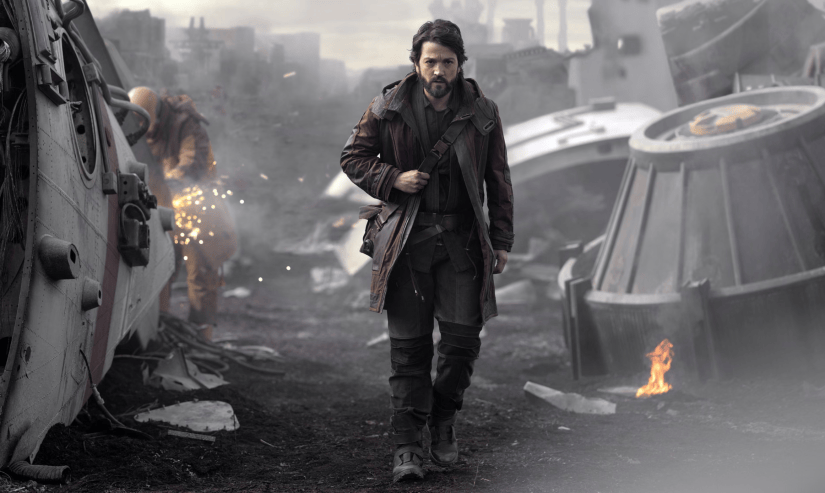
    I mean this as the highest compliment: watching Andor was like watching Star Wars as a 10 year old. I felt the same thrill, the same excitement and desire to be part of it. But I wasn’t turning off my 42-year-old tastes and attendant capacity. Andor does not need the nostalgia. It just does the thing.

    Amazingly, it does so without being boringly adult. It isn’t super violent or slow or sexual or yes-I-know-there-are-spaceships-and-aliens-and-we’re-sorry-about-that-but-we-want-to-make-a-point-about-capitalism. There are some tougher themes present, but as part of Star Wars. There’s high politics and spycraft and brutality and not a little wrestling with moral ambiguity. Of course there are: it’s a rebellion. And there are droids and Tie Fighters and star destroyers. Of course there are: it’s Star Wars.

    It’s just all the things you want a story to be. It’s serious enough to be exciting, and open-hearted enough to be fun. What happens is as important as how it happens: you’ve seen a thousand blaster standoffs, but oh my god how are they going to get out of this one?! It exists as a coherent entity. The Senate matters, the spaceships matter, the characters are somehow actual family, and you’re seeing a slice of a universe that clearly exists outside of the frame.

    Just a ridiculous thing to pull off.

    I rewatched Rogue One afterwards and had altogether too many feelings. I already thought Rogue One was pretty good, but Andor really ratchets up the emotional heft1. The third act – already peak sci-fi – is a cardiac wrecking ball.

    I have rarely been so enthralled. I am still not over it ending: four months later I still catch myself feeling sad about it.

    1. A friend noted that Andor also deepens the end of Return of the Jedi: the Empire falls, and goddamn right is the galaxy going to celebrate ↩︎
  • The Steerswoman

    The Steerswoman

    My favourite books of 2025 were the Steerswoman series, by Rosemary Kirstein. I loved them with the whole of my heart.

    Imagine if there were an order of female explorer-philosopher humanists, given free rein to wander the world investigating whatever they like. The Steerswomen are respected by everyone due to their decency and reciprocity: if you ask a question of a steerswoman, she must tell you the truth. But in return you must answer any question she asks, or else fall under the steerswomen’s ban.

    But curiosity is not a trait beloved by all, and something is up. And I will say no more than that, because part of the fun is working it out for yourself. Best to just go in blind.

    Do know that it is worth it. Like the whodunnit where the clues lead you a merry dance but slot into place at the end, it is trustworthy. Not that it’s a crime thriller. As Cory Doctorow put it, you don’t even know what genre you’re in.

    There are 4 books so far, all very different from each other and all equally satisfying. The lead character, Rowan, is reliably smarter than I am, and it is a joy to see the world through her sharp eyes and ability to filter noise. Oh to be so perceptive. I ended the series perfectly willing to ditch my life and go train in the Steerwomen’s guild.

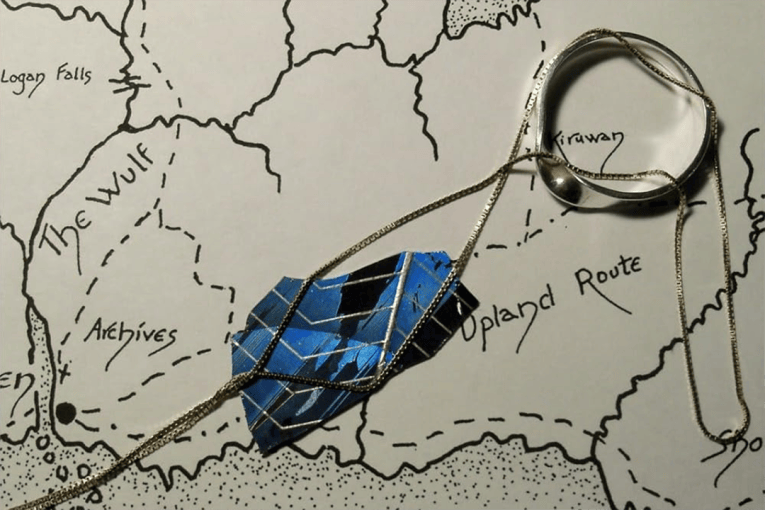
    Oh also each book starts with a map. I mean come on.

    Should you buy it? As Rowan would say: possibilities are two. And it’s £2 on Kindle. If you enjoy please please ping me: I need to talk to people about it.

  • 2024: Books: The Travelling Photographer’s Manifesto

    I’ve read a lot of books on photography. Memoirs, theory, technical guides: there’s a lot of good stuff out there. But just occasionally a book speaks to you. The Travelling Photographer’s Manifesto, by David Hobby, is one such book.

    So you’re taking your camera to a new country and you want to get some decent photos. Maybe you don’t speak the language. Maybe you don’t know your way around. Maybe you’re secretly nervous you can’t do the place justice. Maybe you’d love to get to know the locals and take some portraits, but let’s be honest: that kind of charm is a superpower and you don’t have it. But whatever you’re doing, you’re going to need a lot of kit – best to pack it all just in case, right…?

    This book tells you how to do these things. Like literally, how can you introduce yourself to a complete stranger and – respectfully, in a way that isn’t exploiting them and that works for you both – end up with a nice portrait that makes both your lives a little better? What literal words can you use to achieve this?

    David Hobby has spent years taking willing students to Hanoi and teaching them how to navigate such new territory. What kit should you carry? What can you prep in advance? How do you get the lay of the land into your head quickly enough? How do you push through the nerves of talking to people? All this is explained in specific detail.

    You learn the beauty of the early morning, and the benefit of naps. You learn the value of tiny bulldog clips, and that you can bond over Google Maps. You learn about shooting how it looks vs how it feels, and how to decide which you want. You learn tried-and-tested approaches to finding your shots, and planning your day.

    And you learn the social side that nobody actively teaches because it’s usually secondary to the technical side (but also maybe because nobody’s actually sure they’re doing it right). It’s the kind of solid advice that feels like common sense once you hear it, but you wouldn’t discover it by yourself for years.

    Then there’s the technical side: tips and tricks on composition, lighting, timing, rhythm – the accumulated wisdom from decades of photojournalism. I’ve read enough photography manuals to recognise gold dust when I see it.

    And above it all: what is it you’re trying to do? How can you come up with your raison d’etre for being in this place with a camera? How do you work backwards from that?

    I am pretty timid when alone in new places, and in all honesty my travel photography hasn’t been up to much of late. I may come back with some decent compositions, but I’m never far from the beaten track. I have found some ways around this1, but I’m certainly way too awkward to befriend any locals. That’s just alien. Yet…reading this book I could see a pathway. In my dreams I’m signing up for his 2025 Hanoi trip.

    About 2/3 through this book inspired me to buy myself a Fuji X100V. It’s always in my pocket now. It’s brilliant too. I’m hopeful.

    1. I recommend carrying a large toy dinosaur to kick you out of your comfort zone and stop you worrying what other people think. Bear in mind his reputation may rapidly outgrow yours. ↩︎
  • 2024: Books: Harry Potter and the Methods of Rationality

    This magnificent Harry Potter fanfic is not for everyone. But if you like it, you will like it.

    What if Harry had been raised by scientists? What if he was spectacularly, generationally bright? What if his reaction to the existence of magic was to hurl the scientific method at it until something shatters? What if the plot of Harry Potter is playing itself around him while he does so?

    Many books have clever characters. But the cleverness is usually relative: they’re smarter than everyone else in the story, but only because the others are artificially slow. Or it’s just implausible foresight that allows them to construct elaborate plans that go their way at every step.

    Not the case here. They’re just outright smarter than you.

    The characters actively acknowledge that you can’t realistically concoct plans where more than one big thing needs to fall your way – it won’t work. So they don’t even try. They scheme and they fail and they improvise and they keep going. They solve problems elegantly and surprisingly. And always with better situational awareness than I can lay claim to: whenever I saw something coming the characters had already anticipated it and taken action to avoid it. This is 99% impressive and 1% demoralising, but you get over it.

    And irritatingly it’s all coherent. Everything has an explanation. Occasionally something mad happens and you think it’s jumped the shark but then the shark comes back and fucks you up.

    It’s a very clever way of teaching you how to think. The author has a pre-built world of danger and brilliance and intrigue that he doesn’t need introduce. He can just use it as a prop for what he wants to do, which is make you think better. And annoyingly it does actually make you think better. I was, as the kids say, humbled. But not, as the kids mean, fake-embarrassed at having my awesomeness pointed out to me in public. No, I just realised I am dumb in a lot of ways.

    For example: one of Harry’s biggest bugbears is people jumping to conclusions. Just sit down and think for five minutes, he implores everyone. Just five minutes. Maybe you’ll have some new insight, maybe you won’t, but give it five minutes. Anything of importance is surely worth five minutes.

    Reader, I have adopted this principle in the time since finishing the book and it has had a non-trivial impact on my life. This is humiliating.

    Also the story is really very good. It does not betray you. It does not cheat. It does not pull rabbits out of hats. It even fixes some plot holes. There is a Draco Malfoy plot that one can only stand back and admire. It’ll ruin you for other books, frankly. You’ll find most characters a bit slow and stupid for a while. I have rarely been so glued to anything, and never to fanfiction.

    Oh and it’s also very funny. Because, you know, it wasn’t good enough.

    If I have any criticism at all, it’s that act 2 dips a little. Not a lot, and it comes roaring back, but a little.

    hpmor, as the cool kids call it, is spectacularly humanist, spectacularly clever, and spectacularly useful. Do note that it is spectacularly long.

    It is also free. Download the epub, and email it to your Kindle. And please tell me what you think. Also how.

  • The Peripheral

    The Peripheral

    The Peripheral (Amazon Prime) doesn’t mess about. It drops you right in, and you’ve gotta keep up. You may struggle, as I did, because it takes no prisoners. But it’s worth it.

    The year is 2032. There’s been an internal US war of some sort. VR is pretty immersive now, and ex-soldiers make a living in ‘sims’ – violent video games. But one soldier is continually outplayed by his younger sister, so when a new VR device arrives, and the money’s too good to pass up, he asks her to take his place. She lands in London, in a simulation so real she can actually feel what’s happening to her. It does not go well.

    The future comes thick and fast and in deep grandeur. London is overlooked by statues the height of mountains. Sure, you think, whatever – it’s the future. But there’s a reason. There’s always a reason.

    Everyone is intelligent and does the smart thing in any given situation. Everyone is capable of absorbing new information without requiring half an episode to freak out and be talked round. Everyone is gracious under pressure. Essentially: everyone behaves exactly as you’d hope you would if your reality were upended. But despite doing everything right, *it all still goes wrong*. I like this.

    While everyone’s smart, some of them are proper psychotic. You think you’ve seen it all, but this show comes up with some truly appalling ways to behave. Geez. It helps that half the cast are Brits and the others have southern US accents to die for: the Brits sound super sinister in comparison. Plus they all get to say interesting stuff *all the time*, and are charismatic to a fault. One showdown in particular is just phenomenal – you’ll know it when you see it.

    It’s not really a show you can make predictions about. From time to time you think you’ve got the lay of the land, but then there’s some whirlwind of new ideas and probably an unexpected robot and whoosh – everything’s different. Just enjoy the spectacle. This is to be expected as it’s based on a William Gibson novel: it stays true to his form. You just land in the world, and there’s a lot that’s incomprehensible for a while. It throws you the odd bone, but you spend a lot of time trying to stay afloat.

    If you wanted to be a cheap critic you could say it exploits the sunk-cost fallacy. It’s a lot of work to figure out what’s going on, and your brain really does not want this to be a waste of your time. So it’s in your interest to think you’re enjoying it, and the threshold for backtracking is super high. And I agree that when people do this in the real world it’s a grubby trick. Continental philosophy innit. But for entertainment: bring it on. Exploit me. Manipulate my emotions as much as you like. Do whatever you gotta do to get me invested – that’s what I’ve signed up for.

    I don’t think it’s all a trick, though. There’s enough food for thought that your brain chews on it for a day then cheerily spits stuff out when you want to sleep.

    All in all: loved it; very exciting; favourite sci-fi since The Expanse; did I mention the adorable southern accents, you’ve never heard people tell each other to fuck off like this, come the metaverse I’m giving myself a Texas drawl.

  • Good things of 2022

    Books

    Fiction: The Expanse series

    I got slightly obsessed with The Expanse last winter and tore through all the books. I thus recommend them, which is certainly not the sunk cost fallacy. They are top sci-fi, I promise. Humane, thoughtful, and rich. Cavalier captains, cowboy pilots, badass marines, sweary diplomats, noir detectives – it’s just great.

    Fiction: Children of Time

    Do you want to read a book about giant space spiders? Are you sure you want to read a book about giant space spiders? Because it is an odd sensation to experience constant low-level revulsion while reading a story, but if you’re good with that this is the book for you. It is a book about giant space spiders. They evolve out of tiny space spiders. There are some humans too, but they’re mostly jerks. The spiders are where it’s at. Just relax into it.

    Non-fiction: The Natural Navigator

    I assume everyone’s jealous of people who can read nature. People who can identify bird calls, or point at a tree and say ‘that’s unusual’, or point at a cloud and say ‘that’s worrying’, or point at a bee and say ‘that’s Ernesto’, or very confidently know what a fern is. Such people seem to experience the world in a very satisfying way. It’d be nice to be like that.

    I figure your options for achieving this are:

    • Retroactively develop an interest at age 5
    • Experience some sort of amnesia, get rescued by a hot recluse, learn the wonders of nature, get rescued, go back to the city and realise it sucks and you want to be a hot recluse too
    • Get an ecology degree
    • Tristan Gooley

    Tristan Gooley is the easiest option. He will get you 10% of the way there, anyway, and that’s enough to feel like a wizard for a bit.

    I’ve read three of his books about the natural world, and they’re all one fascinating fact after another. The Natural Navigator is a good start. It teaches you to answer one question: which way am I facing? Other than the position of the sun, how do you know?

    You learn that the branches of trees are most dense towards the south, and then you suddenly notice that lots of trees are like this. You learn that birds usually sit facing the wind so they can take off quickly, and then you suddenly notice birds more. It’s great.

    You read one book for 90mins and then get to wander around the world spotting all sorts of patterns and clues that were there the whole time. I recommend this experience wholeheartedly.

    TV

    This is Us

    This is Us is the best written show on TV and I will hear nothing against it. The words, man.

    (I haven’t actually finished it yet, so don’t tell me anything please)

    Boots

    Blundstone boots are the magic trinity of ankle boots: light, comfortable, and hard-wearing. They work for the office, and for the Devon coastline. They have grip, without looking like hiking boots. If you walk funny, like me, they take two years to wear down on one side. And the colour doesn’t fade for ages.

    In 2022 mine dealt with Norwegian forests, muddy towpaths, snowy pontoons, Disneyland, and fundraising dinners. They aren’t actively waterproof unless you buy a specific model, but in practice I’ve had no trouble. There are dressier versions too, although they’re still boots.

    If you would like a second opinion, see Adam Savage.

    Fitness

    The Body Coach app

    Joe Wicks’ Body Coach app has kept me fit for 2 years now. You get a series of workouts to do, at home, in monthly cycles. Some are 20mins, some are (urgh) 40mins. Once complete, you get a harder series. And repeat. It’s always a challenge, but always achievable.

    Joe does the workouts in real-time with you, so it’s not like those YouTube videos where you’re yelled at by some beefcake who won the genetic lottery. You see him struggling, or needing a rest, or really not enjoying himself. He’s likeable too, or at least he is when he’s not making you do fucking squat jumps.

    It’s a mixture of aerobic exercise and weight-training. He introduces dumbbells at a certain point, but you don’t need any more equipment than that.

    And most of all, it actually works. I have kept it up. As a result I’ve been doing weight-training for 18 months, which is not a sentence I ever thought I’d write. It is very pleasant to feel fit, and I do – anecdotally, sample size of 1 etc – feel mentally sharper. I recommend just getting up and doing it before work: you get an early sense of achievement, and very little time to think up an excuse.

    She’s a Beast

    Relatedly: if you’re interested in weight-training but are put off by the constellation of bullshit that surrounds it, I recommend the She’s a Beast newsletter. It’s not about magically gaining 30lb of muscle in 3 months (impossible), or wanting to look like Chris Hemsworth (losing his hair anyway, pfff). It’s just lifting weights to be strong and healthy, via evidence, evidence, and more evidence. What works (slow and steady), what’s wishful thinking (you can’t lose weight and gain muscle at the same time), what’s unknown (how different genetics interact with different routines), what’s stupid (random supplements).

  • Top Gun: Maverick

    Top Gun: Maverick

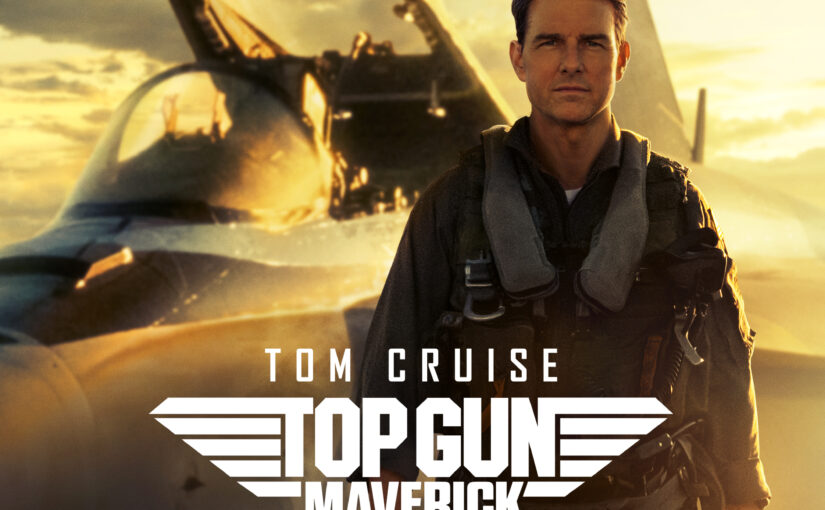
    Top Gun: Maverick is a surprisingly quiet film. I mean obviously there are lots of F-18s going neeeooooowwwww which is great, but behind it there’s a kind of peace. Honestly.

    It’s not macho, and it’s not shouty, and the soundtrack doesn’t bombard you, and it’s not trying to trick you. When you’re excited, it’s because there is cause to be excited. When you’re sad it’s because it’s genuinely sad. Don’t get me wrong, I have no problem with having my emotions manipulated – that’s what stories are for – but it’s nice when it’s done by making you feel part of a team. You feel *trusted*.

    That’s partly because it’s a simple story, well-told. The big action sequence is so well-telegraphed that it’s easy to follow – despite being super-fast. In fact the whole film just flows. It has a pace and a rhythm and it sticks to it. It’s almost musical. When things heat up it’s fast and exciting – but still clear and direct. When it needs to slow down it does so cleanly. It’s somehow *graceful*.

    I would guess this is due to the teamwork of Cruise and Christopher McQuarrie, who are getting very very good at this kind of smart blockbuster. It’s their signature style to treat the audience like an intelligent friend who needs the details explaining and can take it from there. The dialogue says a lot in a little. The aerobatics are astonishing, but not ridiculous. Danger is fed in moderation. And Jennifer Connelly is about the same age as Tom Cruise.

    It also pulls off the trick of being a sequel in spirit but not blueprint. It’s worth rewatching the original Top Gun beforehand as the story follows on smoothly, without needing any major reversals or shoehorny twists. Obviously it’s still about fighter jets, but it pays homage to the beats of the first without repeating them. It even manages to introduce a character’s child – usually a death-knell for any sequel – without being tedious. Even Penny is a callback if you listen carefully (it turns out). And they ditch the weird 80s dialogue, thankfully.

    It’s still essentially one man’s story. The focus is on him throughout, just as in the first film – there aren’t really any side-plots to speak of. This is always a risky move as you’re banking on everyone finding said character interesting. But he is. Possibly in a Tom Hanks we-just-all-want-to-be-him kinda way, but there’s nothing wrong with that. And it’s done so well that it seems meaningful to be watching the end of his 30yr career – even if you hadn’t thought much about Top Gun in decades.

    This is what I mean about it being quiet. It doesn’t yell this stuff. It’s just there and pleasing. McQuarrie is known for showing his films to people and iterating till he gets the reaction he wants. What a concept.

    I didn’t end it wanting to be a fighter pilot. But I did end it wanting to be…a hard-working good person? Also to have my own airstrip and a little plane I maintain in a golden-hour barn.

  • 2:22 A Ghost Story

    2:22 A Ghost Story

    I really enjoyed this. It’s the story of a woman trying to convince her husband and friends that her house is haunted, and her baby in danger. One’s a know-it-all skeptic (comparisons were made), one’s a believer, and all have a past. Debates happen. Things evolve. The set starts to feel like home. I thought it was good.

    It’s not a full-on scarefest, but has its moments and is unnerving enough that your adrenalin levels are just that little bit elevated from beginning to end. And the audience reactions are entertaining in themselves.

    Also it has Rosa from Brooklyn Nine-Nine in it, which is awesome because Rosa. She is not particularly Rosa in this play, and even though I do understand how acting works this was still surprisingly surprising*. I found her and the others entirely compelling.

    I am not normally very good at plays, so any play I enjoy is usually at least different. Thank you very much to Hiba for the suggestion and the tickets!

    *also see: Encanto

  • Books of 2021

    Books of 2021

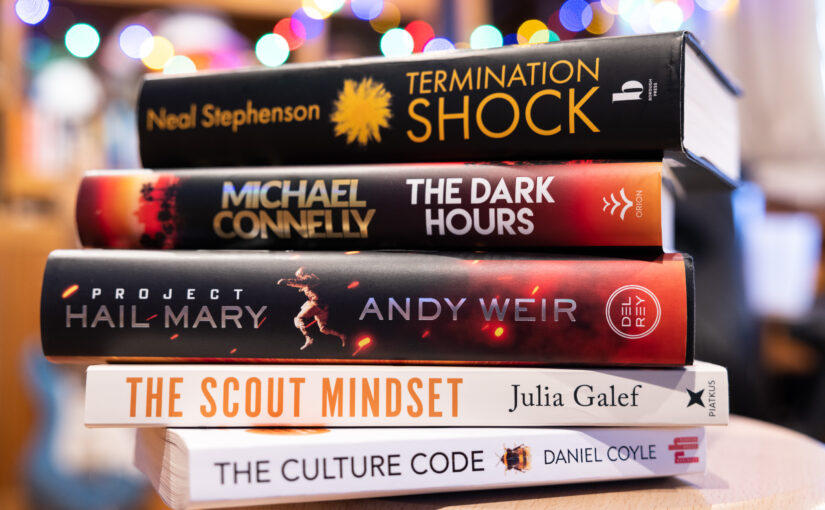
    Termination Shock, by Neal Stephenson

    It’s politically toxic to suggest that climate change could be addressed by geoengineering – deliberate and large-scale intervention in the climate system – because the effects would be hard to predict. But maybe we should do it anyway.

    It’s the end of the 21st century and climate change is impacting most of the planet, sometimes catastrophically. Unilateral geoengineering becomes an option. Cue a giant technothriller that’s as much about teaching you about how levees work as following the trials of a ex-ranger hell-bent on revenge against a particular feral pig (there are a lot of feral pigs), or the combatants in a YouTube-led martial-arts-based ‘performative war’ at an ever-shifting India-China border in the Himalayas (it’s hard to explain), or the piloting skills of the Queen of the Netherlands (what it sounds like). And then there are the global political ramifications.

    Spectacular first 50 pages. And, following the initial craziness, some plausible and often-brilliant insight into how the future could look. But it’s mostly a paean to human ingenuity, and how we interpret politics as damage and route around it.

    As ever with Neal Stephenson he tries to shift the overton window of competence. Everyone is very good at their jobs. Everyone is curious, and eager to learn. And most of them can and do kick ass when needed, whether physically or verbally. This is all just normal.

    Every Neal Stephenson book goes off the rails at some point – sometimes brilliantly, sometimes…less so. To read him is to be waiting for this to happen. I’m pleased to report that Termination Shock does so only at whatever point you realise it’s actually a long letter to Elon Musk.

    Project Hail Mary, by Andy Weir

    The sun is fading. Not a lot, but enough to induce permawinter and kill us all off. Why is the sun fading? Dunno, but lots of nearby stars have the same problem. Except one. So let’s send a team to it in the desperate hope they can figure out what the difference is.

    Bit of geoengineering in this one too, except this time to deliberately keep the planet warmer while they wait.

    It’s from the guy who wrote The Martian, and the style is the same: great ideas, interesting and coherent science, and pulp-fiction dialogue where everyone precisely expresses their exact thoughts and feelings.

    Go in blind to this one. Stuff happens.

    The Scout Mindset, by Julia Galef

    This book could not be more relevant to my interests. It’s also highly recommended by Dominic Cummings. I don’t know what to do about that.

    It’s about how to think clearly. This usually means: ‘here are a list of common mistakes we all make, so don’t make those!’. But Julia Galef goes beyond this, giving practical advice on how to avoid such cognitive biases.

    She emphasises that it’s often very difficult. It’s all very well being told that our rational mind often acts as press secretary for our emotions, justifying what we want rather than thinking things through from the ground up. But recognising this in day-to-day practice is tough.

    Cue the advice, drawn from years of research: she started a foundation dedicated to actually investigating such things.

    Her main approach is a series of questions you can ask yourself, like ‘would you support the findings of this study if it supported the other side?’, or ‘if this idea were not the status quo, would I support changing the status quo to it?’. Get into the habit of asking these, she says, and you stand a better chance. It’s some work to do this – you basically need to write a list and check it. I haven’t done this yet. But it all seems sensible, and I fully intend to do so!

    If this piques your interest, this is a better review: https://astralcodexten.substack.com/p/book-review-the-scout-mindset

    The Culture Code, by Daniel Coyle

    What makes for good culture in any group of people? You may not be able to define ‘good culture’, but we know it when we see it. And we certainly recognise the opposite.

    The author argues that this isn’t as mysterious as we think: it is caused by particular approaches (not people), which can be laid out.

    These approaches are:

    • First, you build psychological safety. This makes people feel like a team.
    • Then you turn this into actual trusted cooperation by encouraging the sharing of vulnerability. This sounds like Goopy wellness stuff but is just being open about weaknesses and difficulties.
    • Finally, you establish purpose by clearly showing what you’re trying to achieve and how you’re going to do it.
      • This is more than just having a clear purpose. It’s about knowing how you will achieve your purpose, then communicating it loudly and clearly and continually.
    • And you achieve all of these via small, everyday behaviours – or ‘signals’. These signals must be everywhere, all the time.

    I found this very useful at work. It’s changed how I induct new staff, as well as how I write documentation and introduce new concepts. Worth a look if this is your bag.

    The Harry Bosch novels, by Michael Connelly

    I caught up on the Harry Bosch novels this year. They’re classic hard-boiled police procedurals, based in Los Angeles, and solid as hell.

    I like them because everything follows from the detective work. There are no magical gut feelings, or unlikely coincidences. You can run a string from the crime to its conclusion and know it all makes sense. It’s super relaxing to have that certitude.

    And Harry is a long term friend and role model. He acknowledges the complexities of criminal behaviour in a vastly unequal society, but isn’t afraid to judge. He has a diamond moral code that drives everything he does, often to his detriment. You may not always agree with his actions, but they’re coherent.

    By all accounts it’s a pretty accurate depiction of the LA police force, too. It’s all real acronyms, processes, frustrations, and corruptions. Also the *city* is real: Michael Connelly famously only uses real locations, and you’ll never see someone cheatily beat the traffic at rush hour.

    Harry’s getting a bit old now (worrying), and has a younger partner who isn’t just him in a different body. She’s good too. Lives in a tent. Has a dog. I like her.

    You might have seen the Amazon TV show, which ended this year. I thought it started off a bit weak, but it hit its stride in series 4 and was great after that. It accords to the same principles as the books, but also plays with the form. You see a lot of unnecessary action: people walking to cars, getting coffee, standing in lifts. As a result you never know when something is going to happen. They leave open doors in the background of shots for the same reason. Plus the lead actor is a perfect fit. The Harry in my head is now 50% the guy I’ve known for 20 years, and 50% Titus Welliver.

    If you need a fast, satisfying read, I highly recommend these books. There are loads of them. The first is The Black Echo. Here’s a timeline.

  • Ghostbusters: Afterlife

    If you see a ghost, the correct thing to do is poke it. The next thing to do is get out the HD camera you carry on you at all times and document said poking in great detail in preparation for your Nobel Prize. It is not, repeat not, to scream, run away, trip over, split up, flee crowded areas, devise a super-clever anagram and scrawl it into a manhole cover using your own tooth enamel, etc.

    All the kids in Ghostbusters: Afterlife get this. They find ghosts; they’re curious about the ghosts; they investigate the ghosts; they handle the damn ghosts. I do not have kids, but if I did I would swap them for these ones. They get a lot of good jokes, and the cool action scenes. They’re good kids, Brent.

    The adults try pretty hard too. They’ve mostly got their own boring adult issues like rent and paying for property damage and making sure your kids don’t die, but they’re interesting and not annoying and also resist the impulse to run away from stuff they don’t understand.

    But it’s the kids who carry the story, which is decent enough and gets more nostalia-y as it goes on. No doubt this annoyed some people. Sure, it’s super-poignant if you’re like me and watched Ghostbusters as a kid, and sure, if you’re not like me and didn’t it may lack the same punch, and sure, it could have not done this and still been a decent film. But it didn’t and that is that.

    What it *did* do is warm and funny and inventive. There’s a Spielbergian touch to it all, from the kids all being bright, excitable, and likeable, to the deft intelligence of the action scenes. Childlike but not childish. It’s properly these-characters-are-your-friends-now *fun* and I enjoyed every second of it. The only real weirdness was the third act was surely missing like 10 minutes of footage and maybe a subplot?! But it still worked and that aside I highly recommend doing yourself the favour of sitting in the dark for a couple of hours, smiling.