Reviews

Books, films, TV, theatre and music.

  • Frozen: The Musical

    Frozen: The Musical

    Today I went to the theatre for the first time in forever, for the Frozen musical. I am pleased to report it is exactly what it should be.

    You secretly want it to feel like Disney did when you were a child, when stories and reality still overlapped, and all was wonder and wide-eyed excitement. This is obviously a tall order. Nostalgia can get you partway there, and that’s usually dandy. But a bit of you still yearns for a touch of that breathlessness.

    Frozen gives this a pretty good shot. It is not an easy cash-in. It has put the effort in, and it pays off.

    It does this by being a real spectacle. It is proper dazzling. It fuses beautiful set design with pixel-perfect digital projection mapping, but the two are blended so smoothly that it never feels like a special effect. It’s just Elsa getting emotional and remodeling the entire set in seconds. Wood cracks, snow falls, the temperature seems to drop 10 degrees. Ice radiates perfectly from her hands in choreography that must have taken intricate practice, creating a palace that is honestly visually better than the one in the film. Northern lights shimmer, objects gracefully fly to the wings, and all the time snow swirls in the background. It might have been actual particles of something, it might have been digital: I honestly couldn’t tell. I am a sucker for this kind of ambient magic.

    Olaf is particularly clever. He really shouldn’t work on a stage. He’s a three foot walking talking snowman with a very specific non-human bearing. How do you do that and not have him look like someone in a suit? I will not reveal this secret, but they pull off quite the trick here. I am amazed it worked, but after 10mins I was cheerily watching and believing the walking, talking, non-CGI snowman.

    The above is very much my kind of thing. I very much enjoy appreciating visual skill and hard work. But I also wanted them to play it straight. Plenty of stage shows go meta for an easy laugh or to paper over a difficult segue. That’s even easier to do in shows nominally for children. But Frozen doesn’t. It tells the story, with minimal adaptations for the stage. It retcons it a little in light of the sequel, and adds a fair few new songs as the second half is a bit sparse otherwise (fans will note the odd inspiration from the unused Anderson-Lopez demos on the Frozen Deluxe album). But it’s the right story, well-told, and they don’t shy away from the tougher parts. They don’t attempt the snow giant, but everything else is intact.

    Also: there is a dress. I have been to enough ballroom dances to know a sparkly dress from a holy-wow sparkly dress, and this was a cut above. It was the talk of the interval.

    I haven’t mentioned the music, singing, and dancing because they’re what you expect and enjoy in a west-end production. Impressive bordering on ridiculous. Elsa is played by Samantha Barks (Éponine from Les Mis), who seems to be enjoying herself immensely.

    It’s bright, it’s clever, it’s a bit like being a kid again. And when they play the first two bars of Let It Go there’s a quiet happy sigh from every child in the room. And not a few of their parents.

    Thank you very much to the friend from work who donated the tickets – it was very much appreciated!

  • Bosch

    The final series of Bosch is fantastic. It’s a hard-boiled police procedural with basically zero exposition, based on the Michael Connelly books.

    It never signposts bloody anything, and it plays all sorts of compositional games to keep you guessing. We see the characters doing mundane stuff all the time, so the usual trope-spotting of ‘why are we seeing them walk to the car? something’s going to happen’ doesn’t work. They like to put open doors in the background for the same reason.

    It’s the proper Bosch of the books, too. He’s the moral capstone. “Everyone counts or nobody counts”, and everything flows from there.

    This show was a slow burn. I thought the first few series were a bit dodgy. There was too much single-episode drama that didn’t ring true – people getting kidnapped and then being all fine by the next episode/day etc. But it hit its stride around series 4, and was excellent through to the end of this one (7).

    Thankfully it’s not actually the end, by all accounts – it’s moving studio and it sounds like there’ll be a straight continuation.

  • In The Heights

    In The Heights

    This pulled me into another world for a couple of hours. Just lovely.

    Imagine staring into a fresh coffee on the first proper day of spring, and in the swirls it’s all sun and youth and dreams and salsa and at the bottom, just for a moment amongst the foam, a little hope for the world. That, plus some thoughtful storytelling, a real sense of place, and enormous musical numbers that fill the neighbourhood – but not so much they don’t fit.

    Also: Brooklyn Nine-Nine fans get some extreme cognitive dissonance. You’ll know it when you see it.

    Here are the first 8 minutes:

  • Cruella

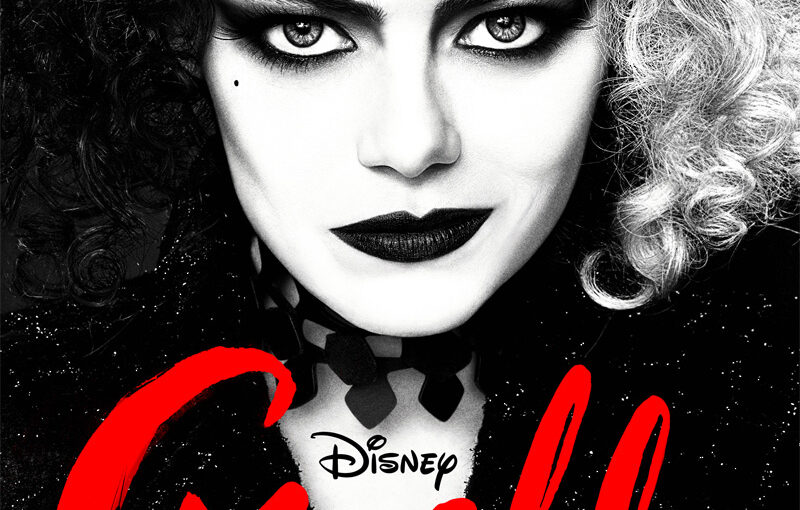
    Cruella

    (Very minor spoilers for the first 10mins)

    Have you seen the meme about Cruella? The one that says ‘Turns out dalmatians killed Cruella’s parents, how are they so obvious, why am I not a scriptwriter lol’? Let me be 100% clear: none of these people have watched Cruella. Block them on sight.

    These people have gone for a cheap gag, for the retweets. Never mind that Cruella itself never sinks to their level. Never mind that it’s a delightful reworlding, full of wit and craft. Never mind the hard work that bursts from its every frame. Never mind that it’s barely about bloody dalmatians. No, these people are connoisseurs of the arts, don’t you know. They’ve memorised tvtropes.org. They don’t have to spend two hours actually engaging with something to know it’s beneath them. I’m glad they’ve been able to signal their superiority and establish standing in their apparently-terrible social circles. They’ve got what they wanted. Now let’s ignore them and speak of things that actually make the world better.

    You might indeed wonder how or why you would make a prequel about one of the most properly-evil villains in Disney history. I mean, she tries to kill 101 dogs. Dogs. She wants to kill dogs. This is a thought crime in all civilised countries. She doesn’t even come good at the end. We can all agree there is no redemption here, so are they really going to try and make her a sympathetic character? This is surely unconscionable.

    I won’t spoil the plot. I will just say this: they have thought of that.

    Cruella knows the story it wants to tell, and goes about it with professional care. There is *work* here. It feels rich. Almost every moment has an insight, or a progression, or a nod, or a spark of the unexpected. Every shot is frameable, every twist a jigsaw piece, every set months in the building, many lines wittier than they could have got away with. And its world is a swirl of impossible one-shot-steadicam dances.

    Indeed, its visual style reaches out of the screen and insists on your attention. It successfully builds a large world with a coherent feel – something that’s especially tricky as it needs to make internal sense even when it shouldn’t. The cars are from the ’50s and the security cameras are very not. Does this matter? I didn’t mind, and still wanted to live there.

    I liked that the characters weren’t stupid. The bumbling comedy sidekicks do not, in fact, bumble. The fashion people are not weighed down by luvvie. The dogs are clever, but not magic. The security guards are competent, and have to be defeated by cunning rather than slapstick. And the set pieces are spectacular, extravagant, and occasionally mad…but not silly. They tread the fine line between fun and ridiculous with a delicate style.

    And the much-maligned plot didn’t go where I expected. It knew what it was doing. Every time I thought it was about to be a little too convenient, there was a reason. My prevailing reaction was ‘huh, clever’.

    I enjoy anything full of inbetween moments, too. Half-second visual gags. Neat turns of phrase. Wit from unexpected quarters. Emma Thompson being Emma Thompson. There was no plot reason to go to the effort of Emma Stone stealing a postal bike rather than a regular bike, but it meant she got to ride over a stormy London bridge with envelopes flying in her wake. Just for a couple of seconds. They put in *so much effort*. Like I said, craft.

    I suspect you can appreciate it from a fashion perspective too, although this is rather outside my area. But also if you finished The Devil Wears Prada feeling that these awful people did not get sufficient comeuppance, there is comeuppance to be found here.

    I’m not saying it’s perfect. You could pick things out, if you wanted to. But there’s so much that’s done so very well that I feel it’s well worth your time. It is put together by competent people, who worked hard. It is never cheap. It is never easy. It is too classy to be meta, and too thoughtful to be dull. Worth a go, if this has piqued your interest. And you’ll see what’s actually going on with the dalmatians.

  • Books of 2020

    My bookshelves and Kindle library show that in 2020 I started dozens of books but finished few. Here are some of the latter that I liked:

    Human Compatible – by Stuart Russell. This is an actual down-to-earth, non pie-in-the-sky book about Artificial General Intelligences: computers that are as intelligent as a person, in a non-specific way. These aren’t machines that can only, say, recognise objects in photographs. These are machines you can have a chat with, and that can figure stuff out.

    Creating such entities seems plausible. Since it’s possible in brains, it…should be possible in software? We just don’t know how to do it yet. But that doesn’t mean we know nothing. In fact, we know quite a lot. Including much about what we don’t yet know. This book goes over the current state of research, the challenges ahead, the potential for such technology, the spectacular dangers that could result, and a framework for reducing such risks from the early stages.

    AGI is a world-changing possibility, and you don’t need to go full Kurzweil to get excited. Basic extrapolation takes you to interesting places, even without thinking about machines that can themselves build more-intelligent machines. Two ideas that stood out for me:

    –machines with human intelligence, but a far greater working memory. Who knows how much knowledge exists out there that just needs someone to join the dots? Feed an AGI every medical journal in the world and see what they spot.

    –AI tutors. We know personal tuition works better than class instruction. Once AGI arrives, we teach them how to teach. Then everyone can get a personal tutor. I am particularly fond of this as I think school is trauma for millions of kids – and would love to see schools replaced with something that doesn’t involve children spending a decade being bullied.

    But this kind of potential isn’t actually the focus of the book. It’s more about mapping how we might get there, and why we should take the possibility seriously. If you’d like to know more, Scott Alexander has a proper review – one informed by an actual understanding of the AI landscape.

    Schrodinger’s Killer App – by Jonathan P Dowling. I wanted to understand what a quantum computer was in more detail than ‘it can do multiple things at the same time, ta-da’ but less detail than ‘here is the equation for the collapsing wavefunction, thus encryption doesn’t work’. I needed quantum computers for someone who has read enough Sean Carroll not to require the double-slit experiment explaining, but still needs their hand holding for the next bit. This was the book! It’s a weird book! Half explainer, half rambly memoir, it takes you down a road and by the end of it you can see how quantum computers work in practice. Not understand, but at least get the general idea without feeling like it’s still a metaphor. You end up knowing why some problems will be helped by quantum computers, and some won’t. You end up knowing why there’s currently only a limited business model for quantum computers (you build one and sell it to the NSA; the end). You get a glimpse of new vistas in the utter weirdness of quantum mechanics, but not in a Deepak Chopra way. You also end up knowing a lot about the author’s life and his philosophy of being. He seemed like a fun, loud guy. He died unexpectedly this year.

    The System – by James Ball. I haven’t finished this yet. But it’s a look at the structure of the Internet, from the physical cabling to how data is regulated in a borderless infrastructure – and how the money flows. I thought I knew roughly what was going on. Spoiler: haha I did not.

    Superman: Up in the Sky – by Tom King / Andy Kubert. The best Superman story in a long time. No bloody Krypton. No bloody tantrums. No bloody heart-to-hearts with wise priests. It doesn’t even lead you down a trail of whether Superman will do the right thing: *of course he’ll do the right thing*. But how do you decide the right thing? And what happens when you make that decision? It’s about the nature of heroism and moral duty – and the role of inspiration.

    Radicalized – by Cory Doctorow. Four short stories about Cory things. Tech. Power. Surveillance. Control. Rebellion. Identity. Look, I don’t know whether his ideas make sense. They’re the far carriage of a long train of thought. I don’t know how people feel equipped to evaluate critiques of capitalism and modern tech without, like, doing a PhD. But as with AGI I think it’s possible to get the gist of what people are thinking about. Cory is great at that. And he writes like a wizard. He sort of zaps you in the first two paragraphs, and then you’re in whirlpool till you’re done. In his attic there’s a shit book where every word is a slog, the characters are flat, and every page drops in overused references to Oscar Wilde. Be warned, though: Radicalized is a grim read. It will not cheer you up.

    Outside of books:

    –Joe Wicks kept me at least slightly fit
    –Mrs Maisel, The Good Place and The Expanse made me laugh and think and occasionally upset me
    –I got an air conditioner and don’t know what I’d have done without it

    Happy New Year!

  • Brandi Carlile

    Me playing Spotify artist-radio during lockdown:

    Me: Who’s this?! It’s great
    Spotify: It’s Brandi Carlile
    Me: What about this?
    Spotify: Another Brandi Carlile
    Me: Ok but this is definitely someone else and it’s excellent
    Spotify: Still her
    Me: Wh…
    Spotify: Just go listen to her albums

    Turns out I really like Brandi Carlile. You might too, if you like country but not, like, heavy country.

    If you like The Story, you’ll probably enjoy everything else.

    Only country singer I’ve ever heard mention skeptics, too.